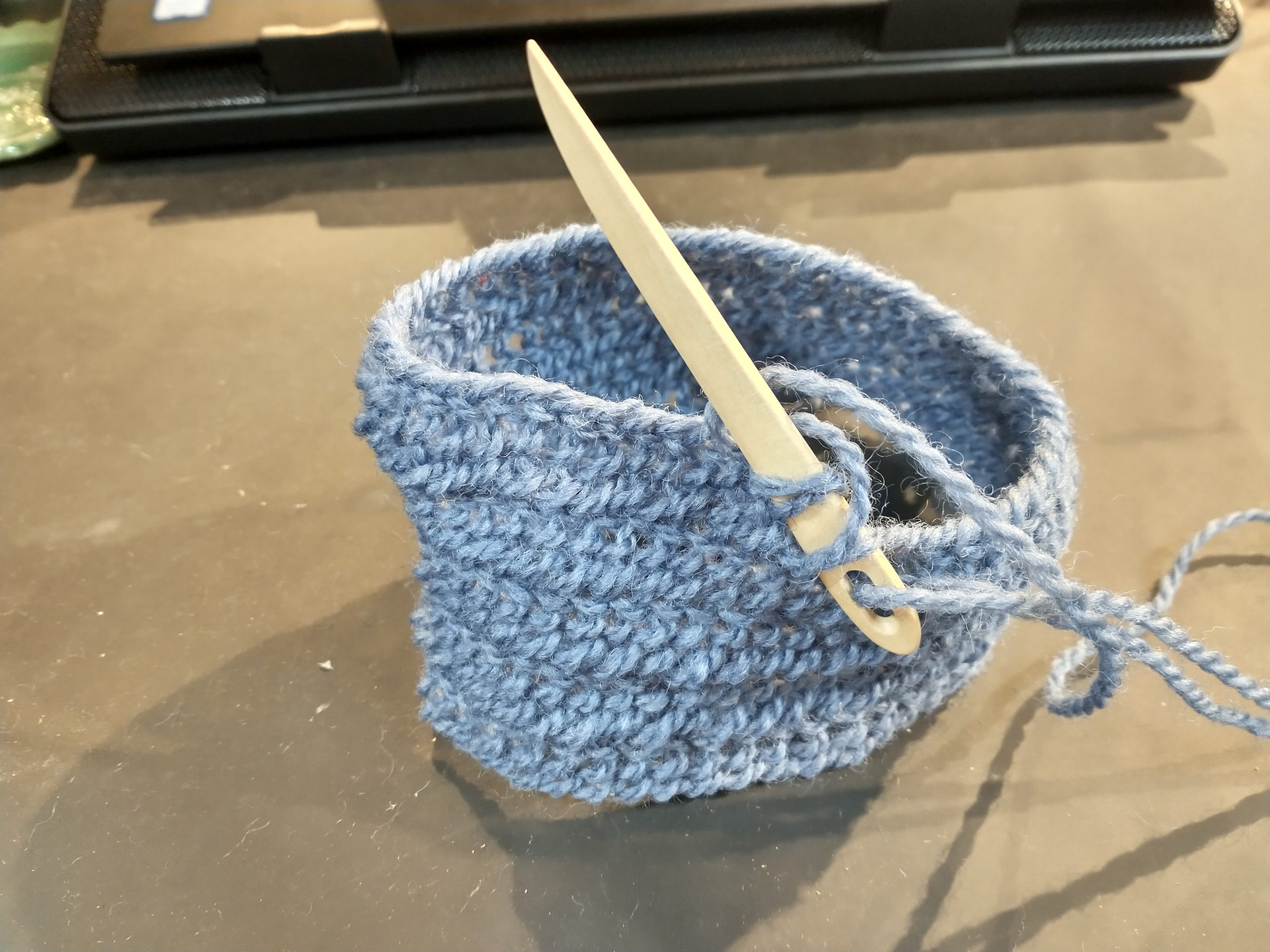
Some ways of doing things are old…very old. As in very, very old.
I remember being struck when I learned Cleopatra lived closer to the invention of the iPad than the building of the pyramids. And we think her era was old! Pull that timeclock back even further, then further still.
In the Northwoods of Wisconsin, there are plenty of reasons to appreciate clothing. This week has been chilly, with a north wind, and we layer up every time we step outside for chores or just to walk from one building to the next. After the February thaw, winter has settled back in, laughing for having teased us with any taste of spring. My hat, scarf, hood, and mittens are my best friends in this weather.
The need to bundle up is nothing new to humans. We cannot fluff our feathers or grow a thicker coat of fur. Neither do we bury down in a tunnel and stay there until the weather warms. And as a farmer with livestock in a non-nomadic culture, migrating south and then coming back later is not an option. I have to find a way to be warm where I am.
Thus the need for clothing—something we likely take for granted every day! For a long, long time in the history of humans, clothing was not something you bought at a store (let alone ordered online and had it shipped to you!). You had to make it. From scratch. Really from scratch, like raise the sheep or grow the flax or tend the silkworms. Every piece of textile production had many, many laborious steps. I look at some of the traditional tools for processing flax into linen and think medieval torture device!
And not all production methods we have today were always available. Everything about making clothing is an invention. Sewing machines are an invention. Looms are an invention. Even needles! How needles are made and how fine they are and what they are made from changes drastically over human history (really interesting rabbit hole, if you are curious). Knitting and crochet are inventions, as are the tools to make them.
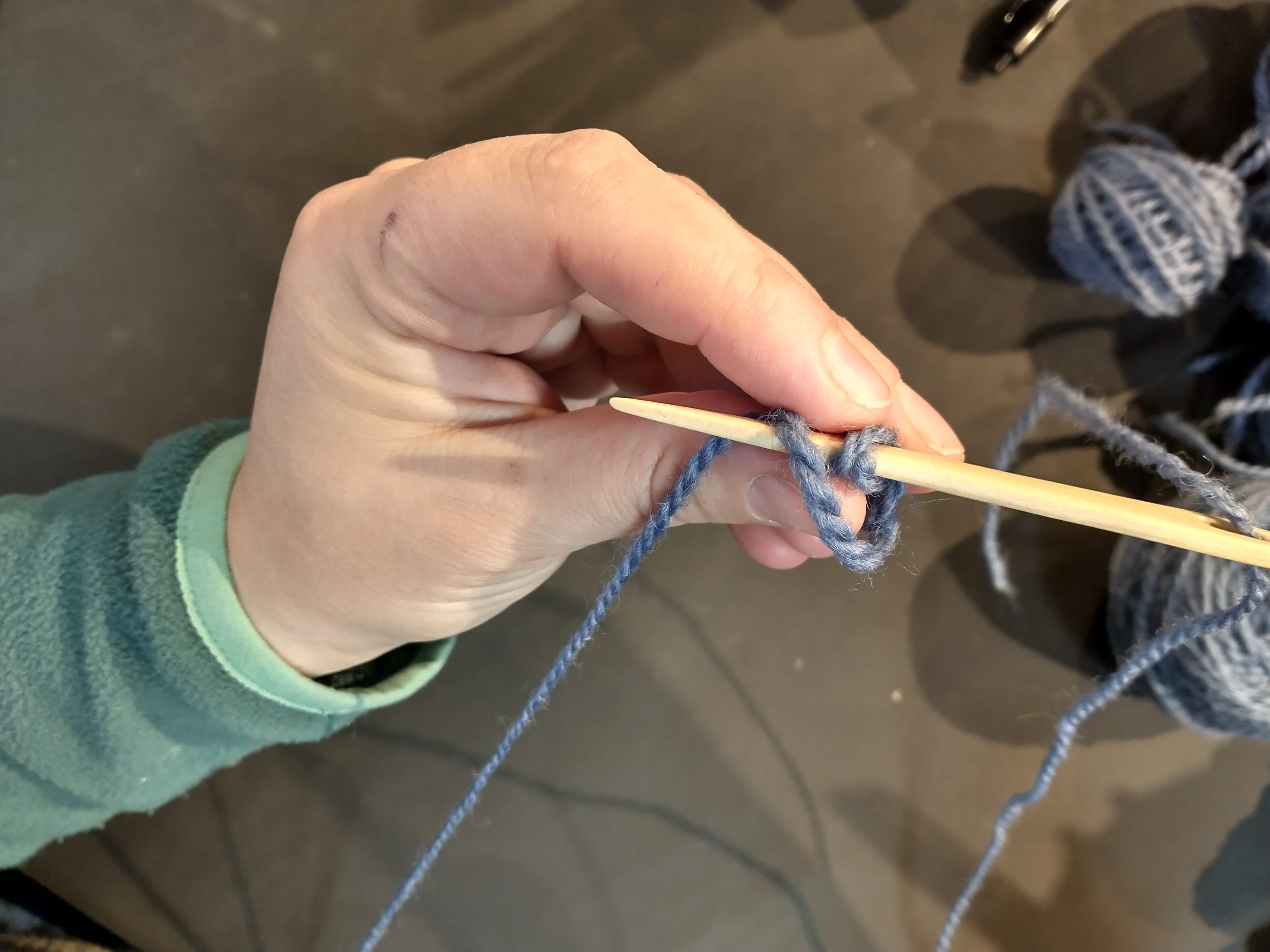
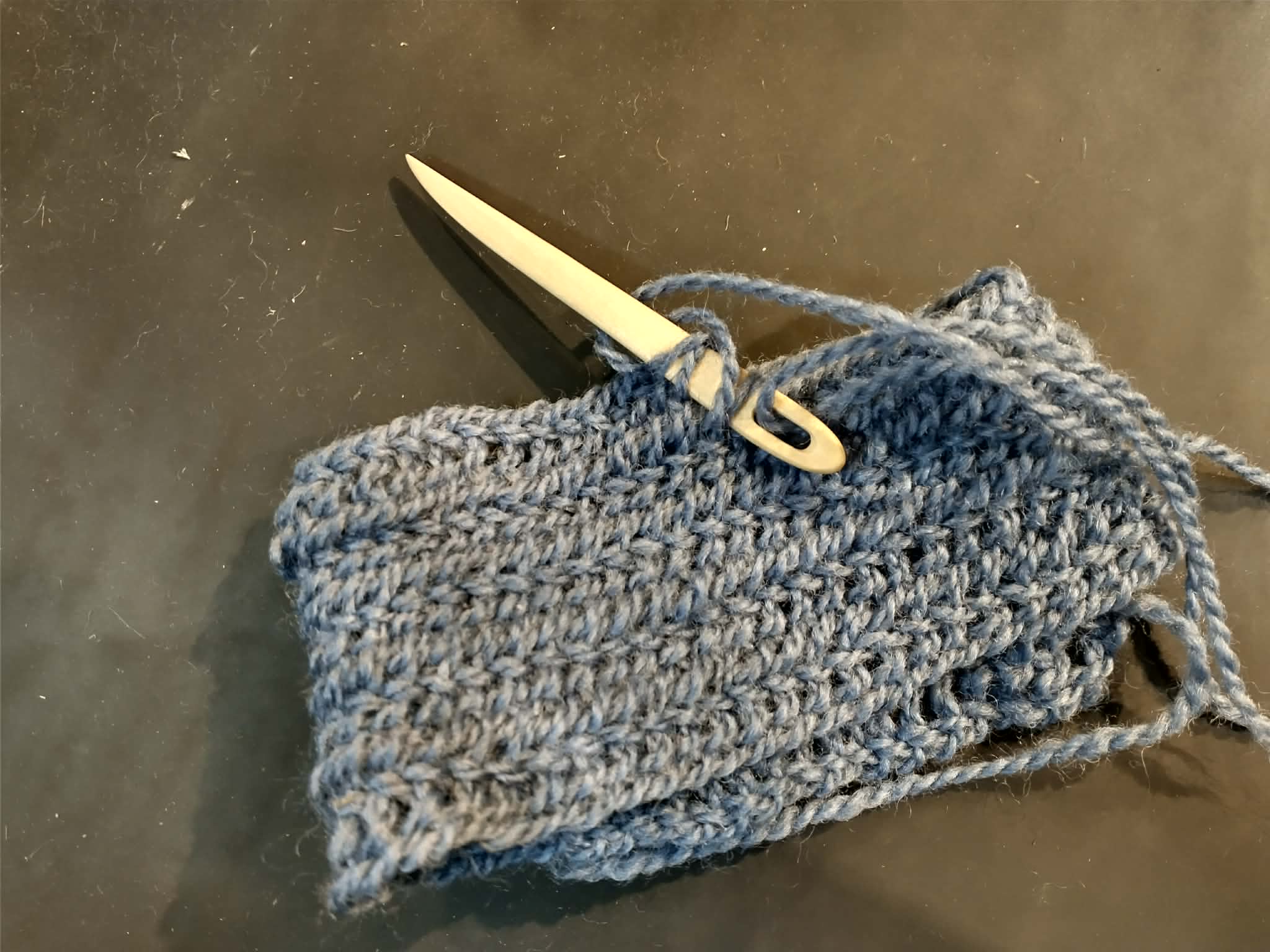
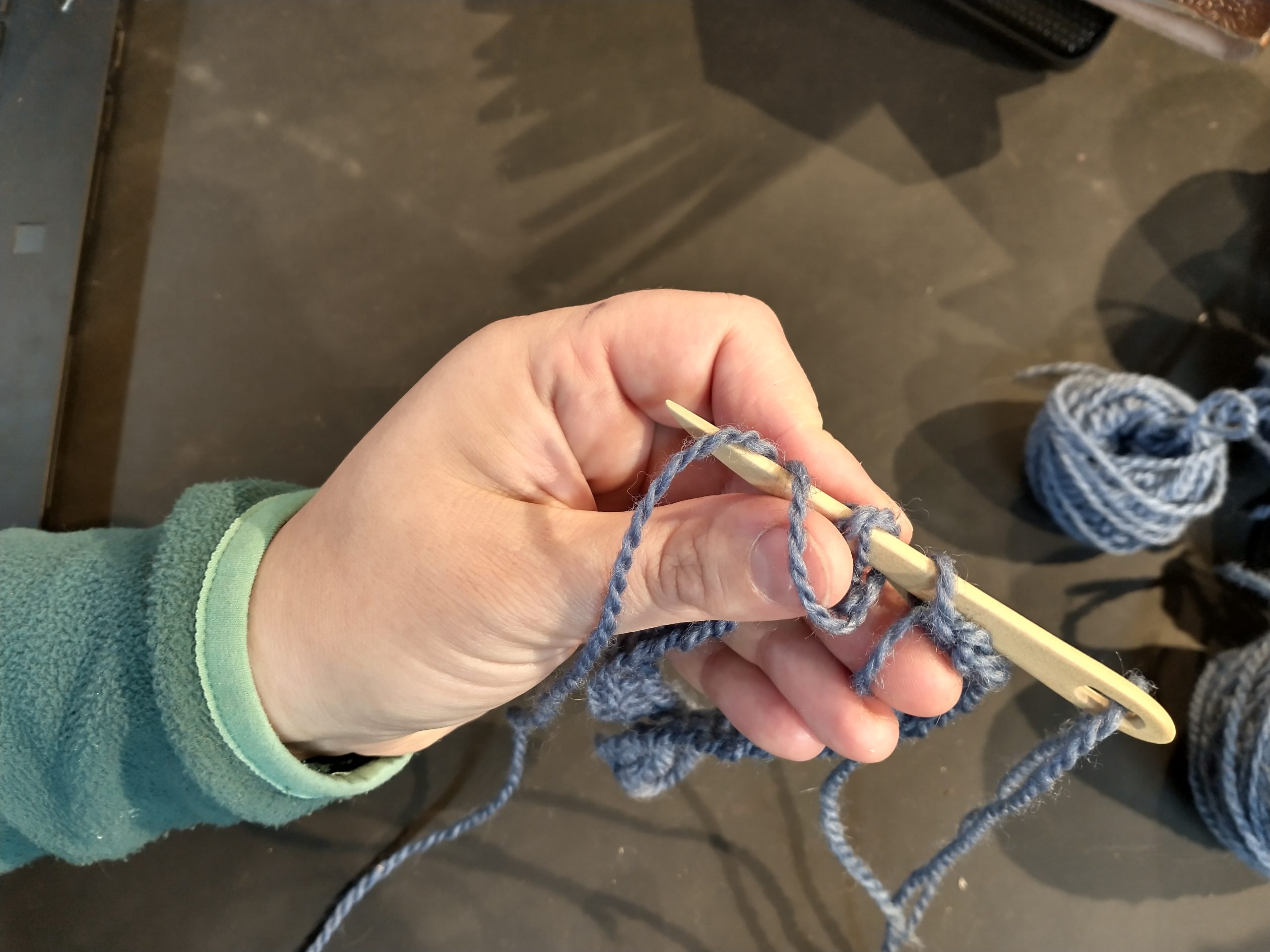
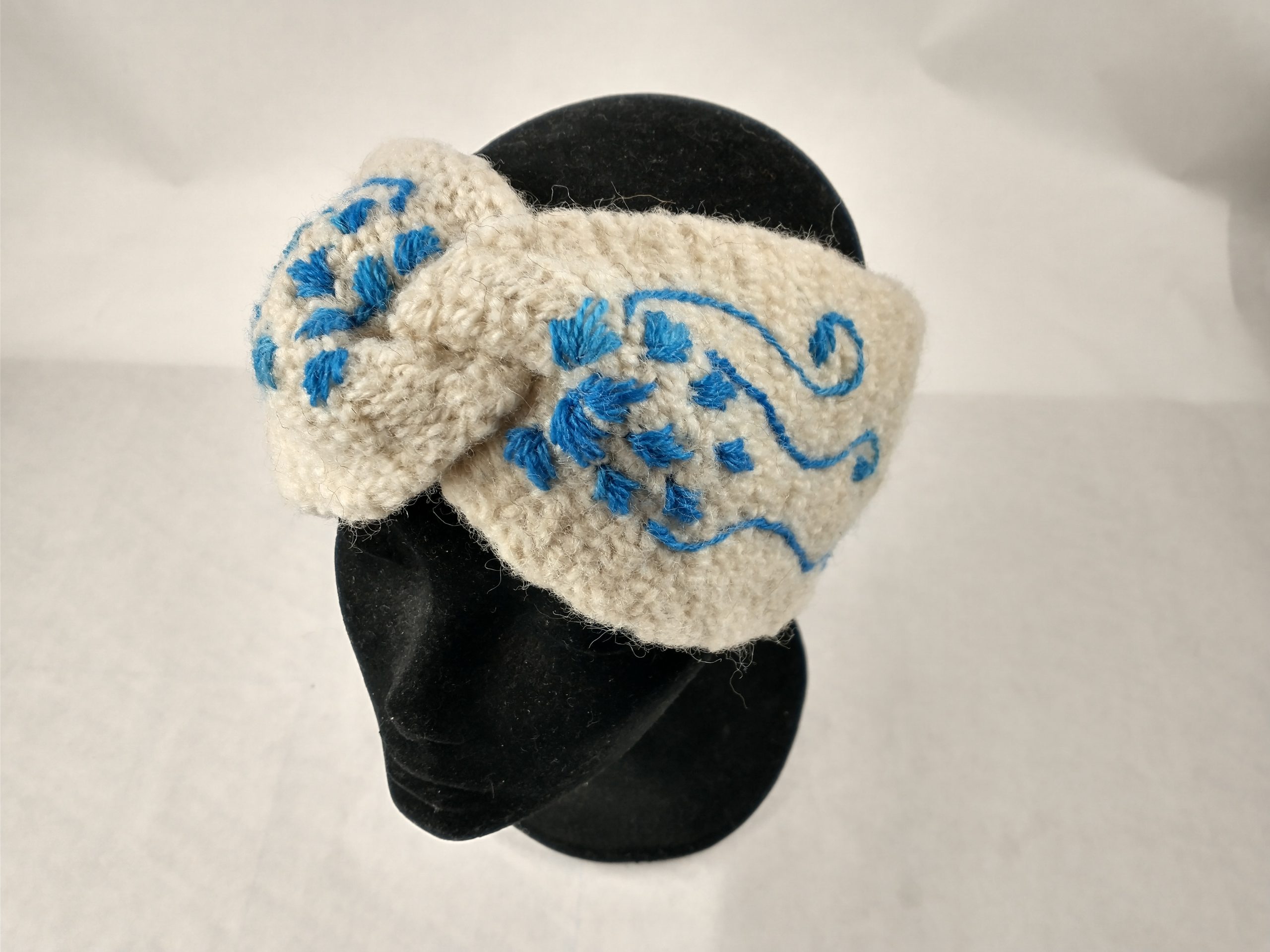
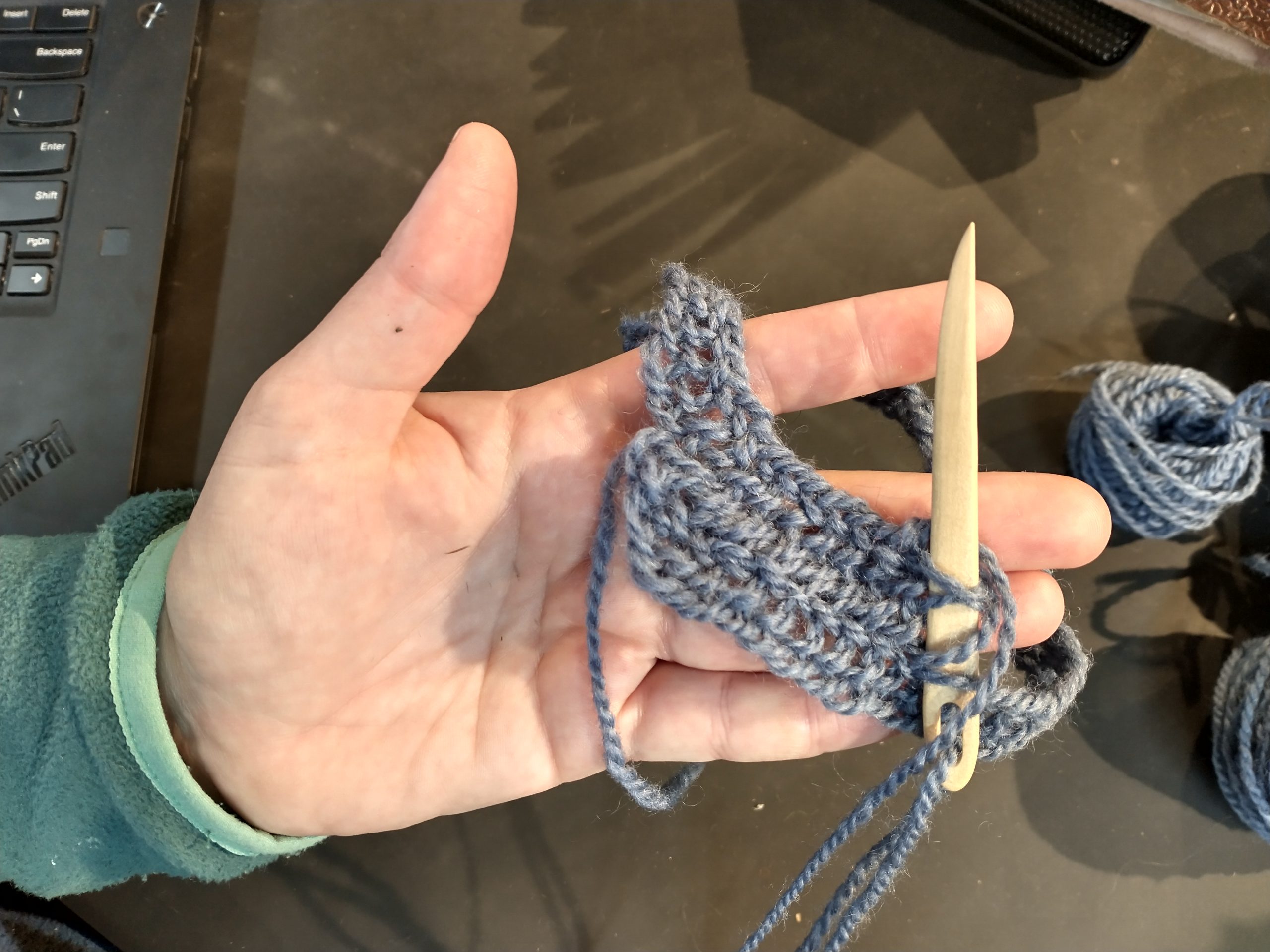
Every year, I like to challenge myself to learn a new fiber arts skill. My recent addition to the toolkit is nalbinding. I know, it’s an odd sort of word, which translates as “needle binding” from Norwegian. Said, “nahl-bihn-ding,” this is a method of making flexible, durable (because they were often wet felted), shapable, wearable textiles with a single, chubby needle that predates the invention of crochet or knitting. Internationally known as “knotless netting,” forms of nalbinding are found all over the world, with different stitches used for fishing nets, gathering baskets, milk strainers, garments etc. The process is extremely low on infrastructure (you just need the needle, no looms or other large gear), portable (easy to pack and take with you), and versatile.
When many Bronze Age and Iron Age graves were excavated across Europe in the Victorian Era and early 1900’s, garment fragments that were not woven were often labeled as being “knitted.” Turns out, knitting was not invented yet in this age! With closer study and better understanding of fiber working technology through the ages, these have proved to either be sprang (a method of twisting fibers strung on a loom to create a stretchy fabric without weft thread passes) or nalbinding.
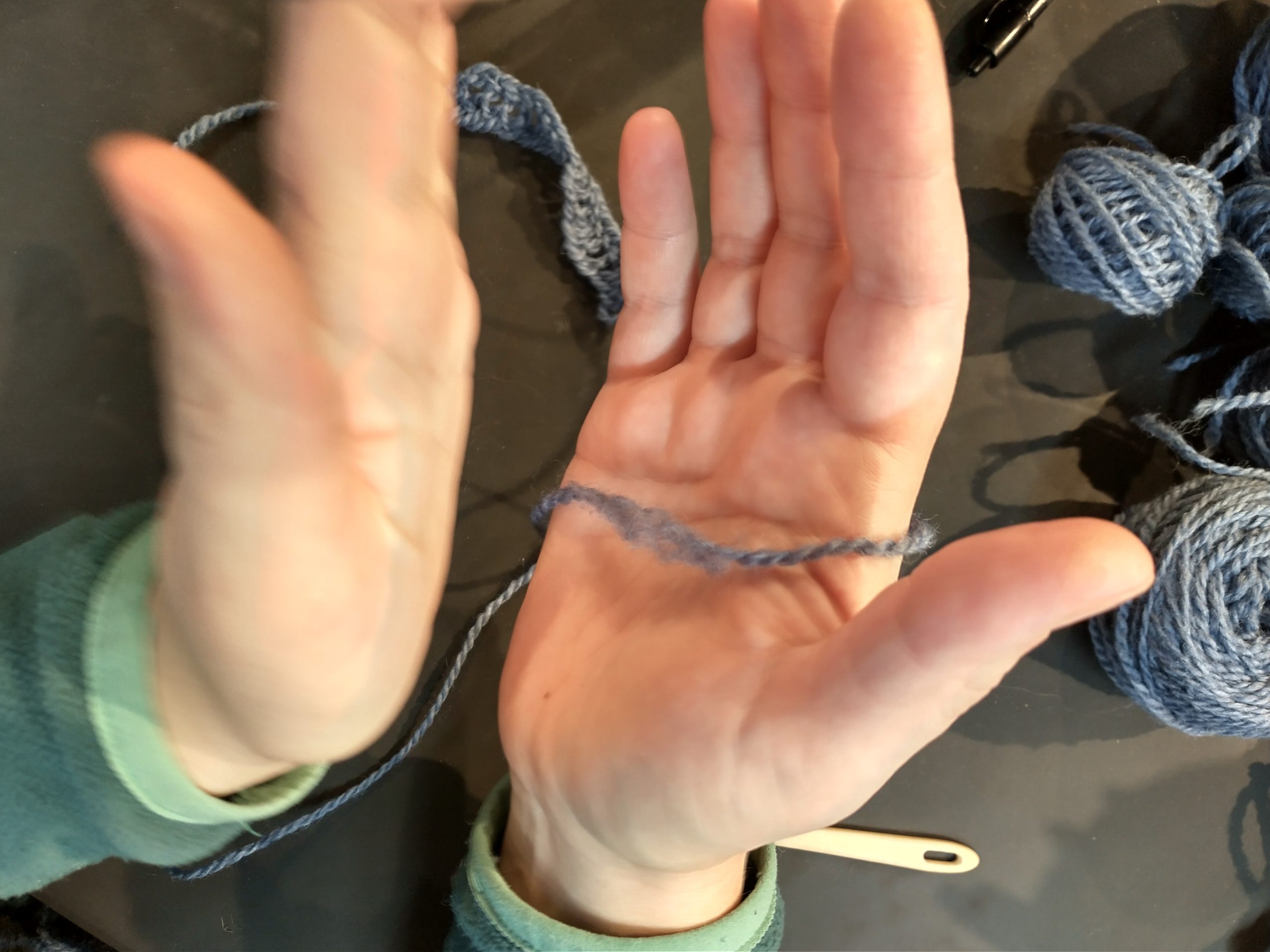
Like crochet, nalbinding works one stitch at a time (though you go from left-to-right, rather than right-to-left), instead of having all your stitches on a needle at once, like knitting. But instead of using a hook to make loops that hand off one to the next, you take the needle through in a select pattern of over and under, catching former stitches to link the new stitch in with the last and the row below. And instead of continuously feeding off a ball of yarn, you pull off several arm-lengths at a time, work this until you almost run out of yarn (because you must pull the strand through the textile with each pass), then splice on the next piece of yarn.
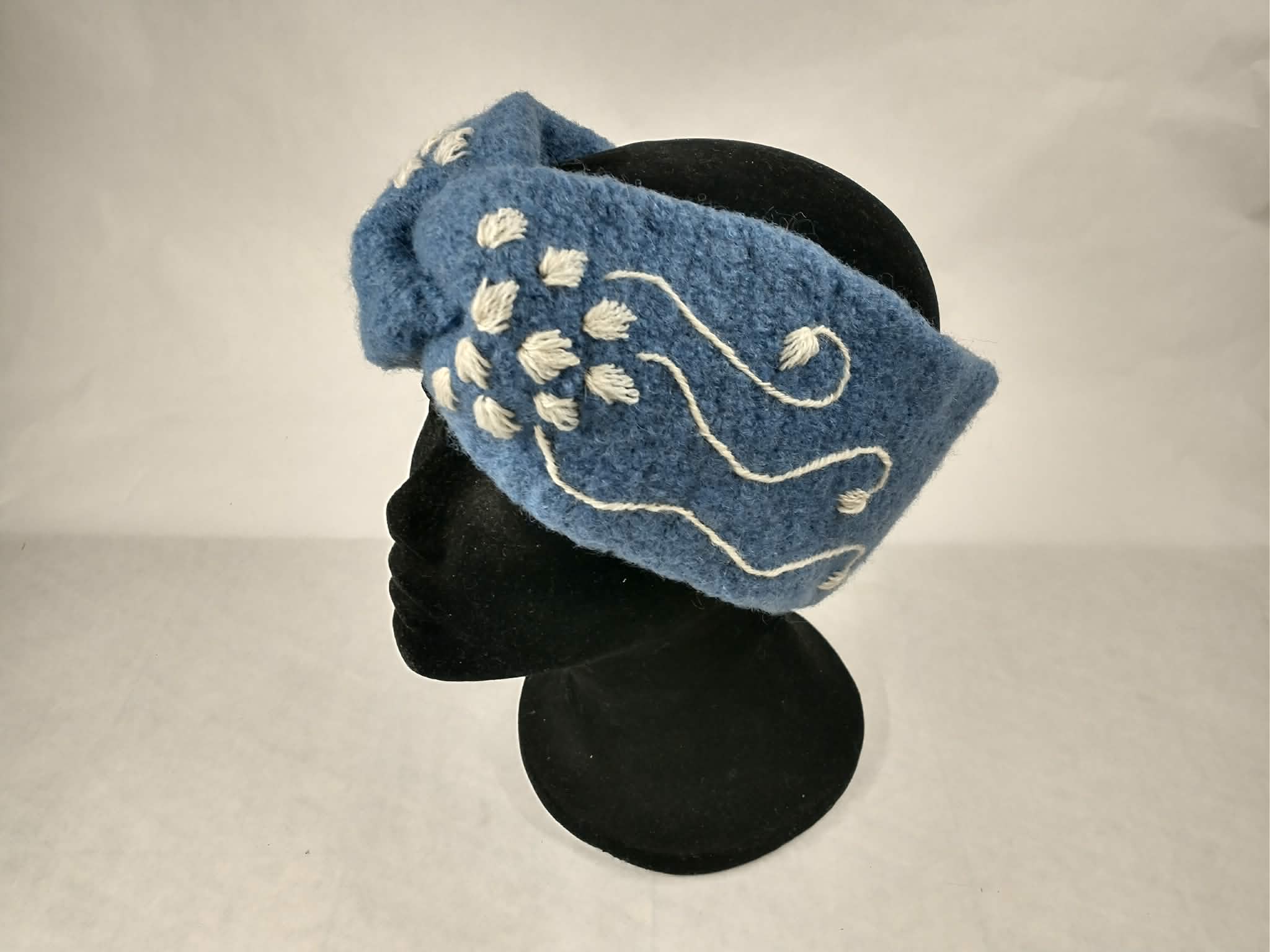
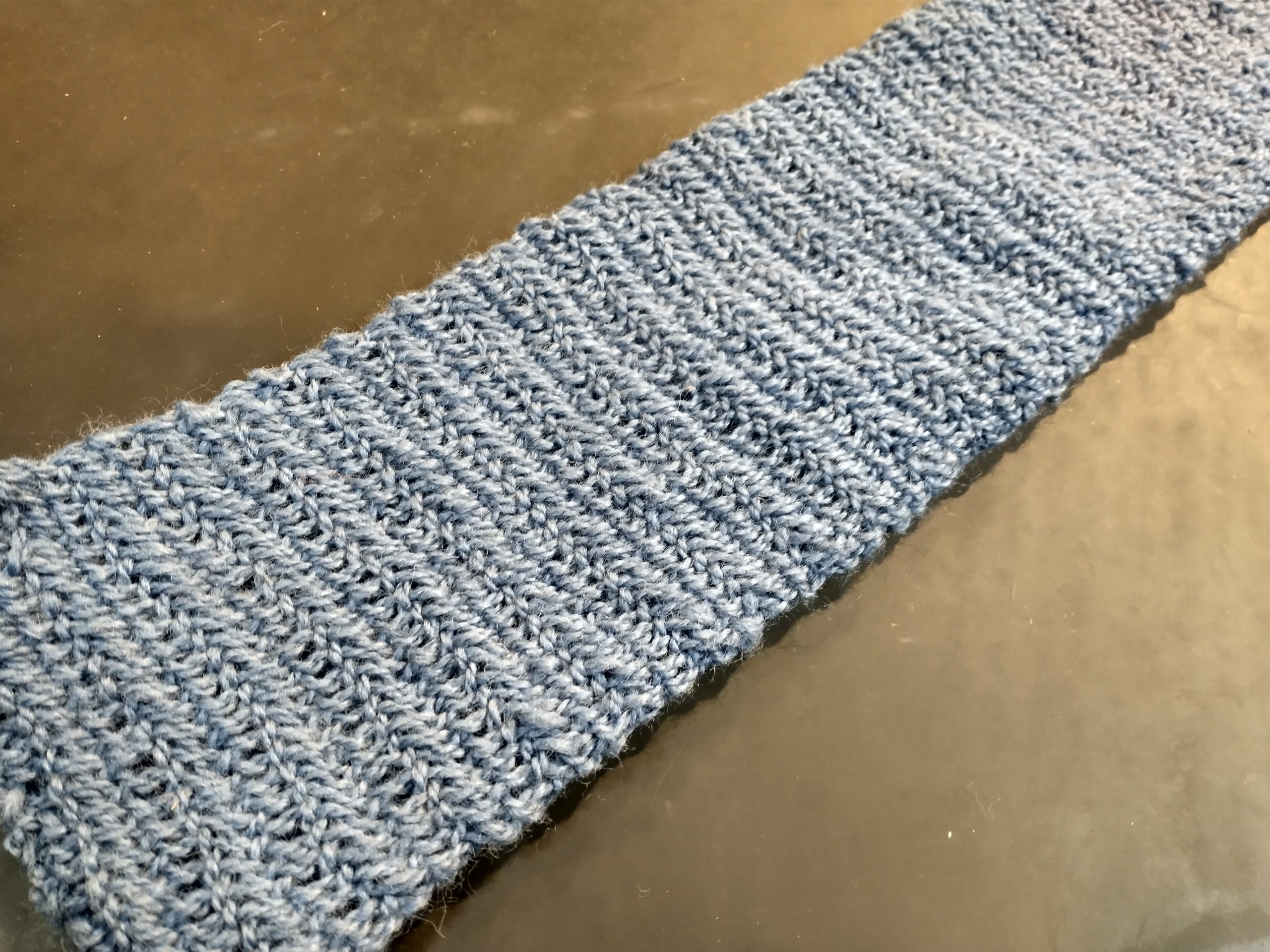
“I can see why this fell out of favor, once knit and crochet became an option.” Mom watches me slowly nalbind away at a headband. “You would have that done by now.”
But sometimes this type of work is not about speed. There is a rhythm to the stitching process, and one of the advantages of nalbinding is it does not snag or unravel like knitting or crochet can, because it is not based on interlocking loops. You can also achieve really interesting pattern textures not available to knit or crochet.
While we have surviving fragments of nalbinding from the Bronze Age, the exact same tool survives from the Stone Age! This is old, old, old technology, folks, and the only way it survives is by fiber artists still keeping that tradition alive today, stitch by stitch. Teaching that to others is my latest adventure, with more rabbit holes to explore to come! This week, enjoy your mittens and hats and think about what traditions you are choosing to carry forward with your hands, heart, and mind.