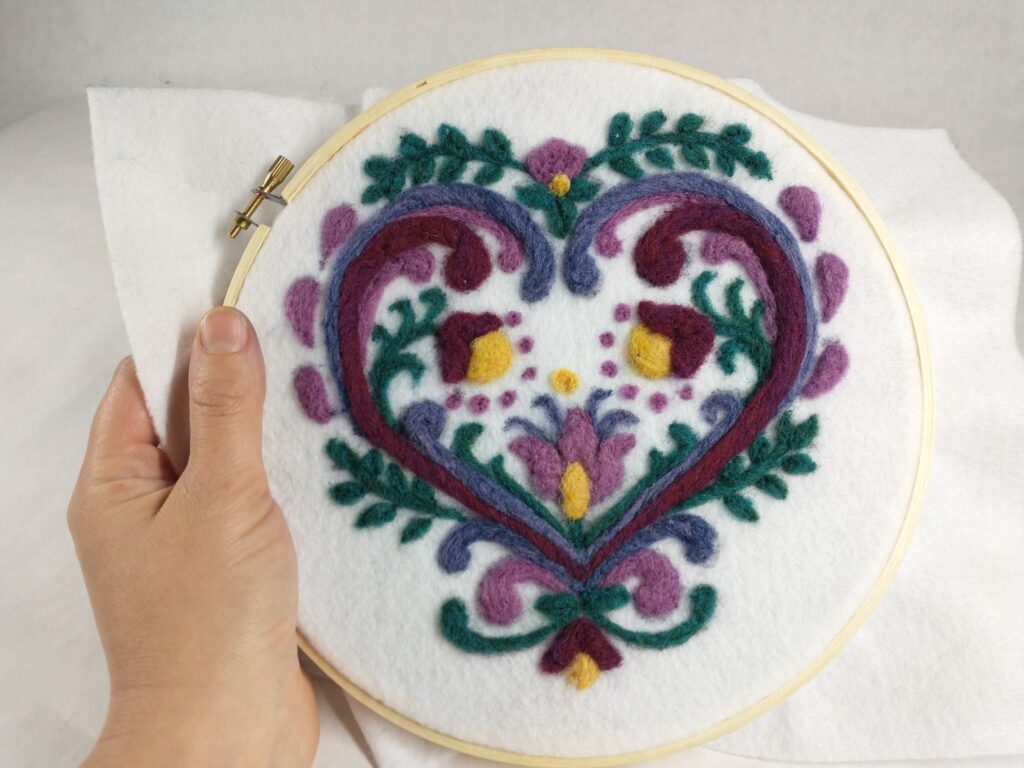
One does not have to look far to find disturbing accounts of violence, unrest, and trauma. Even when we are engaged in finding solutions and offering aid, the situation is draining, and burnout is real. But feeling like we have “nothing left to give” only fuels that which separates. It is critical to take time to emotionally refuel, to “fill the cup,” so we can carry on with dignity, despite.
There are many ways up the mountain for daily practice to help ground and revitalize during stressful times—meditation, writing, music—but recent studies are pointing to fiber arts having a unique, balanced, and effective role in balancing the mind and building calm and wellbeing.
PubMed looked at nineteen different studies, and while their measuring methods and parameters varied widely, “All the studies report short‐term improvements in the outcomes measured, which include anxiety, stress, depression, interest in life, self‐efficacy, social skills, sociability, mood, well‐being, self‐esteem, life satisfaction, health‐related quality of life, and hopelessness.”
Another study published by Frontiers analyzed data from UK surveys on employment and hobbies. “Crafting and other artistic activities showed a meaningful effect in predicting people’s sense that their life is worthwhile,” said Keyes, study leader and cognitive psychologist at Anglia Ruskin University, adding, “the impact of crafting was bigger than the impact of being in employment. Not only does crafting give us a sense of achievement, it is also a meaningful route to self-expression.”
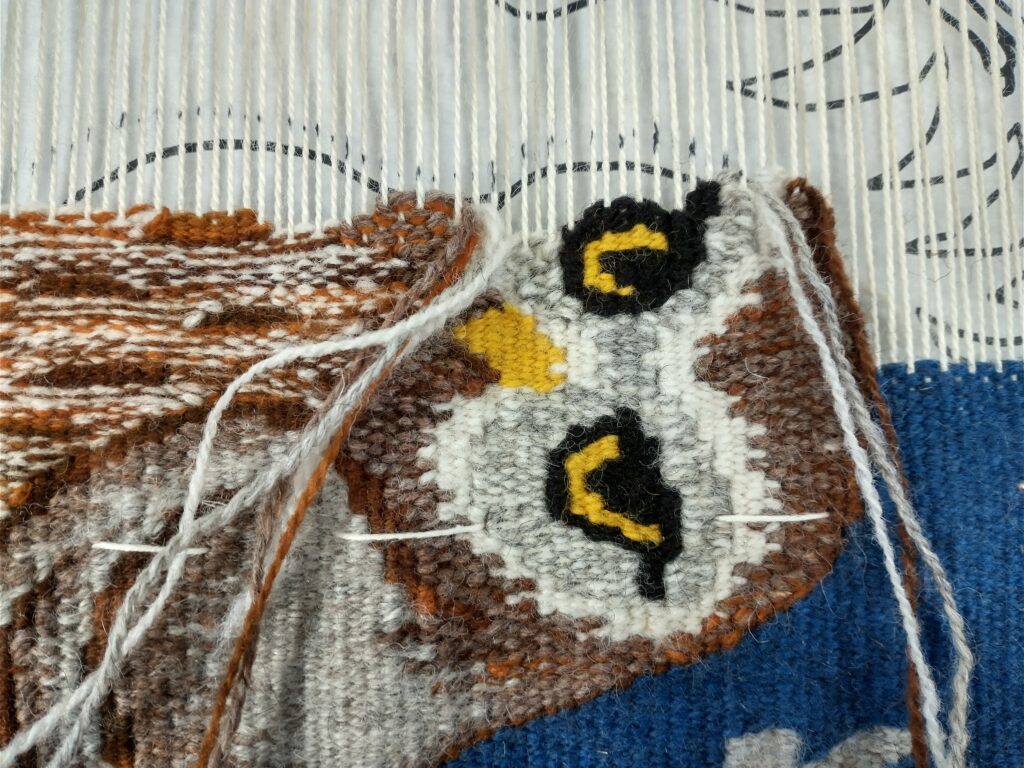
So, what is it about making things with our hands that is so powerful for mental and emotional health? Here are some key points to consider:
Slowing Down. In our technology-infused world, everything spins faster and faster, including bad news. Media is constantly trying to grab and hold our attention, and patience is waning. Engaging in an analogue process that asks us to slow down, be present, and pay attention is an active choice to step off the merry-go-round whirlwind of society. Working with both your hands in fiber arts strengthens right and left hemisphere coordination, which helps improve cognitive flexibility—a skill that quickly shuts down when we feel overloaded and stressed.
Small Repetitions. Many types of handiwork require small, repetitive motions, like drawing a threaded needle through fabric, moving knitting needles or crochet hooks to form stitches, weaving yarn through warps, etc. Participating in these types of focused, meaningful, small repetitions for at least 45 minutes has been shown to release serotonin and dopamine in the brain in healthy, small doses, while reducing cortisol (a stress hormone). These help fight depression and anxiety naturally while aiding in a sense of grounding and calm alertness.
Seeing Tangible Progress. Making something physical with our hands allows us to see the creation unfold and come to life. Whether this is carving a character from a block of wood or stitching an elaborate flower with colorful threads, something is becoming which was not there before. In a digital world, any tangible nature of our efforts is harder for the brain to grasp than holding it in our hands. Making something is strongly linked as being self-affirming in many studies. The elastic resistance and warm texture of wool specifically is linked in the brain with safety, making this a perfect tactile-rich experience while creating. When we struggle with the world around us feeling out of control, making with our hands builds an island of agency and actuation—a well to which we can return to recharge.
Creative Expression. At times when it may feel like our voices are silenced or ignored, creating with our hands can be an essential outlet for emotions that need to be released. “Craftivism” is a real phenomenon, where the process of making is also a process of protest or speaking out against injustices. As we build mastery in technique, allowing our imaginations to flourish, creative making allows us the opportunity to experience “flow,” which pulls us out of “small mind” cycles into larger emotional/spiritual “big mind” experiences that can be intensely healing and rejuvenating. Fiber arts have a long history, and this can also help us root in traditions and ancestry that feels of home or provides inspiration.
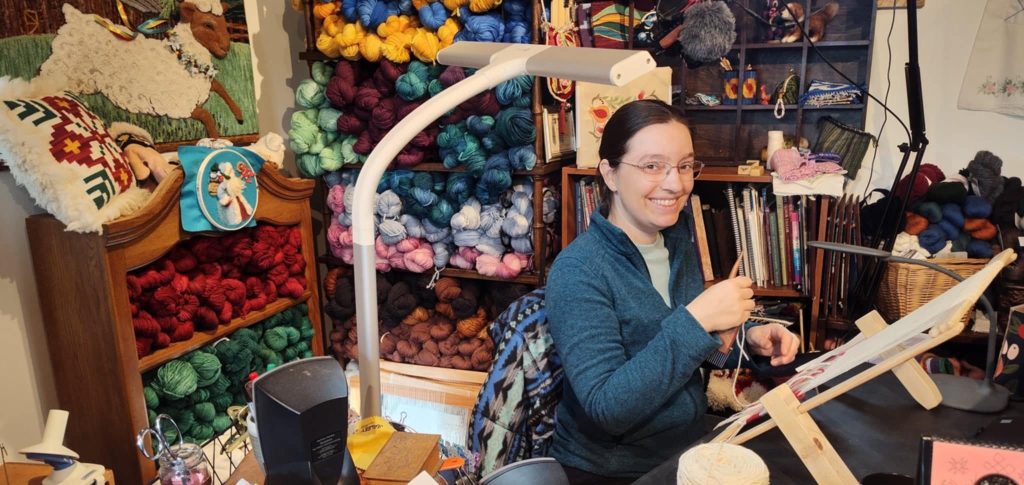
So, when the world feels crushing, pick up something for your hands—something tangible and colorful, in textures that your hands feel happy to hold. Make something, right now. And if you’re not sure how, find a way to learn, whether with a mentoring friend or via a class or book or video, for learning something new is also a way to help rewire your mind when anxiety or depression threatens. Engaging our minds, hands, and hearts in creative acts may turn out to be a great act of resistance against sadness and confusion—choosing to carry on, despite, one stitch at a time.
As a fiber arts educator, I know that part of my work is to teach good technique and critical concepts of design, but the biggest part of my efforts are to tend the people in the space with me. We all walk into the classroom (real or virtual) with our hands and hearts already full from our individual and collective experiences. In the sacred circle of fiber community, let us build a practice together for both surviving and thriving in darkened times. So, take up that needle or hook, shuttle or bobbin, spindle or hoop, and hold the space for hope and resilience. I am here to walk that path with you through my fiber arts practice at www.erindaletapestrystudio.com